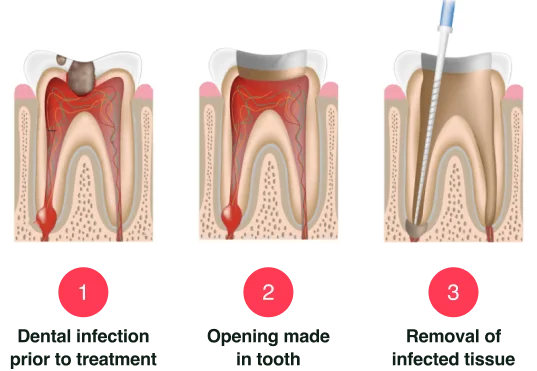
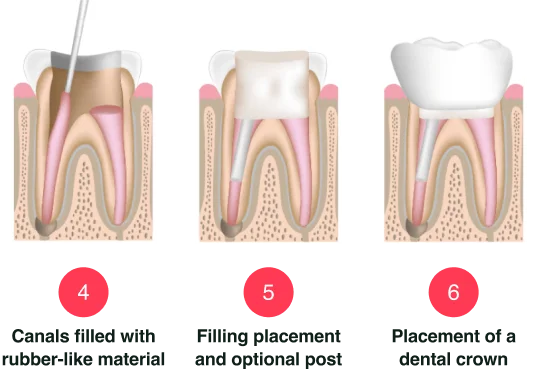
A root canal is a procedure to treat an infected or damaged tooth. The dentist removes the damaged nerve inside the tooth, cleans it, and then seals it to prevent more problems. This helps relieve pain and saves the tooth, often followed by a crown to protect it.
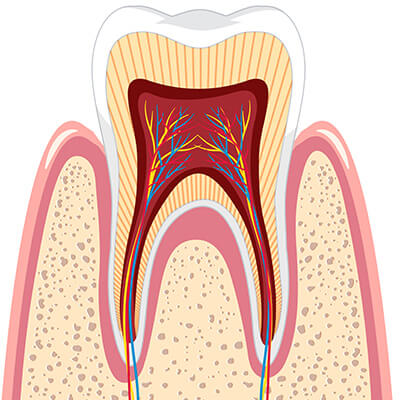
All teeth have a nerve supply which enables us to sense pain, pressure, hot and cold. The nerve is contained in the core of the tooth extending into canals which are based in the roots of the teeth. If this nerve supply is affected through tooth decay, trauma or gum disease it can result in the nerve becoming exposed and infected which can result in a pain. This is the tooth’s way of telling us something is wrong. However, this can also make it difficult to eat, drink and sleep.
If the nerve has become involved for any of the reasons mentioned above, a root canal treatment may be required. This is also known as endodontic treatment and involves using delicate instruments to gently clean out the root canals, remove any exposed or infected nerve tissues and wash them all out to ensure the root canal is clean.
Restorative Dentist
Can You Have It After a Root Canal?
Invisalign
Ensure your dentist is aware of your root canal so they can monitor the treated tooth during the alignment process. We normally wait around 12 weeks before moving a tooth that has had a root canal. If the tooth is straight we might not even need to move it at all
Composite bonding
Composite bonding can be applied to a tooth that has had a root canal. This procedure can help improve the appearance and colour of the treated tooth alongside fixing any other minor imperfections.
Porcelain veneers
Porcelain veneers can be placed on teeth that have undergone root canal treatment. The treated tooth should be healthy enough to support the veneer. It can mask any discolouration of the tooth affected by a root canal
Dental Implants
If the the root canal-treated tooth fails or needs to be extracted, a dental implants can be a suitable replacement option.
Restorative Dentist
What is a root canal? – The Process
All teeth have a nerve supply which enables us to sense pain, pressure, hot and cold. The nerve is contained in the core of the tooth extending into canals which are based in the roots of the teeth. If this nerve supply is affected through tooth decay, trauma or gum disease it can result in the nerve becoming exposed and infected which can result in a pain. This is the tooth’s way of telling us something is wrong. However, this can also make it difficult to eat, drink and sleep.